Planning an Indian wedding in the USA for 2027? You've probably already started saving wedding decor pictures, looking at mandap designs, and imagining how your reception venue will look.
But when you start exploring ideas, there's a lot to choose from. Traditional or modern? Fresh flowers or artificial? A grand stage or minimal decoration?
Indian wedding decor is making room for different looks. Traditional elements are finding their place in modern venues, flowers are becoming part of the overall design, and lighting and table styling are getting just as much attention as the main stage.
If you're planning your wedding in New Jersey, New York, or another part of the USA, here are ten decoration ideas worth exploring for 2027.
You can use them for your wedding ceremony, reception, or the different celebrations leading up to your big day.
1. Natural Looking Wedding Decor with Greenery
One design direction worth exploring for 2027 is a more natural look. Instead of filling every corner with flowers, couples can use greenery, softer floral arrangements, and flowing elements to create a setting that feels connected to nature.
Think of an outdoor-inspired mandap with flowers arranged around its structure, greenery falling naturally from the sides, and soft draping in the background. The same approach can work for a reception entrance, stage, or photo area.
You can also bring this look indoors. If your wedding is in a hotel ballroom, natural-looking arrangements can soften the space without covering every wall or surface.
The idea is simple: let the flowers and greenery work with the venue rather than make the entire space look like a flower display.
2. Mandap and Church Wedding Decorations with a Modern Touch
Planning a Hindu wedding? The mandap is where the main wedding rituals take place, so you'll want it to look special. You can go with a traditional wooden mandap with brass details and marigold flowers, or choose a modern design with soft drapes, fresh flowers, and elegant arches.
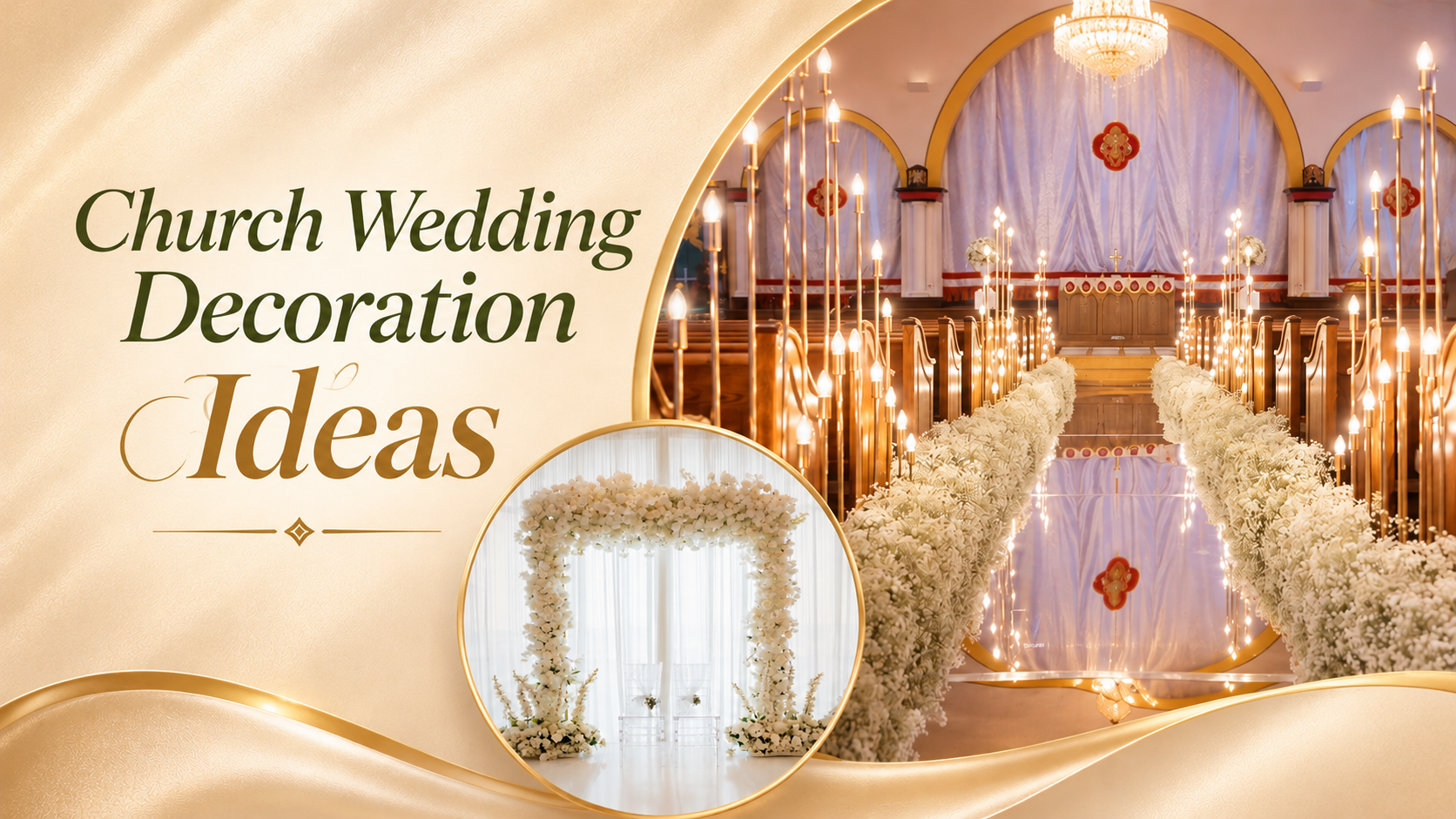
For a Christian wedding, the church entrance, aisle, pews, and altar are the main areas to focus on. A beautiful floral arch at the entrance, flowers along the aisle, and matching arrangements near the altar can make the ceremony space feel warm and welcoming.
Whether it's a mandap or a church ceremony, you can combine traditional details with modern decoration styles to create a look that suits your wedding and venue.

3. Statement Florals Instead of Ordinary Flower Arrangements
Flowers have always been an important part of Indian weddings. What's changing is how they're being used.
Rather than limiting flowers to small arrangements on tables or around the stage, couples are exploring bigger floral features that become part of the venue design.
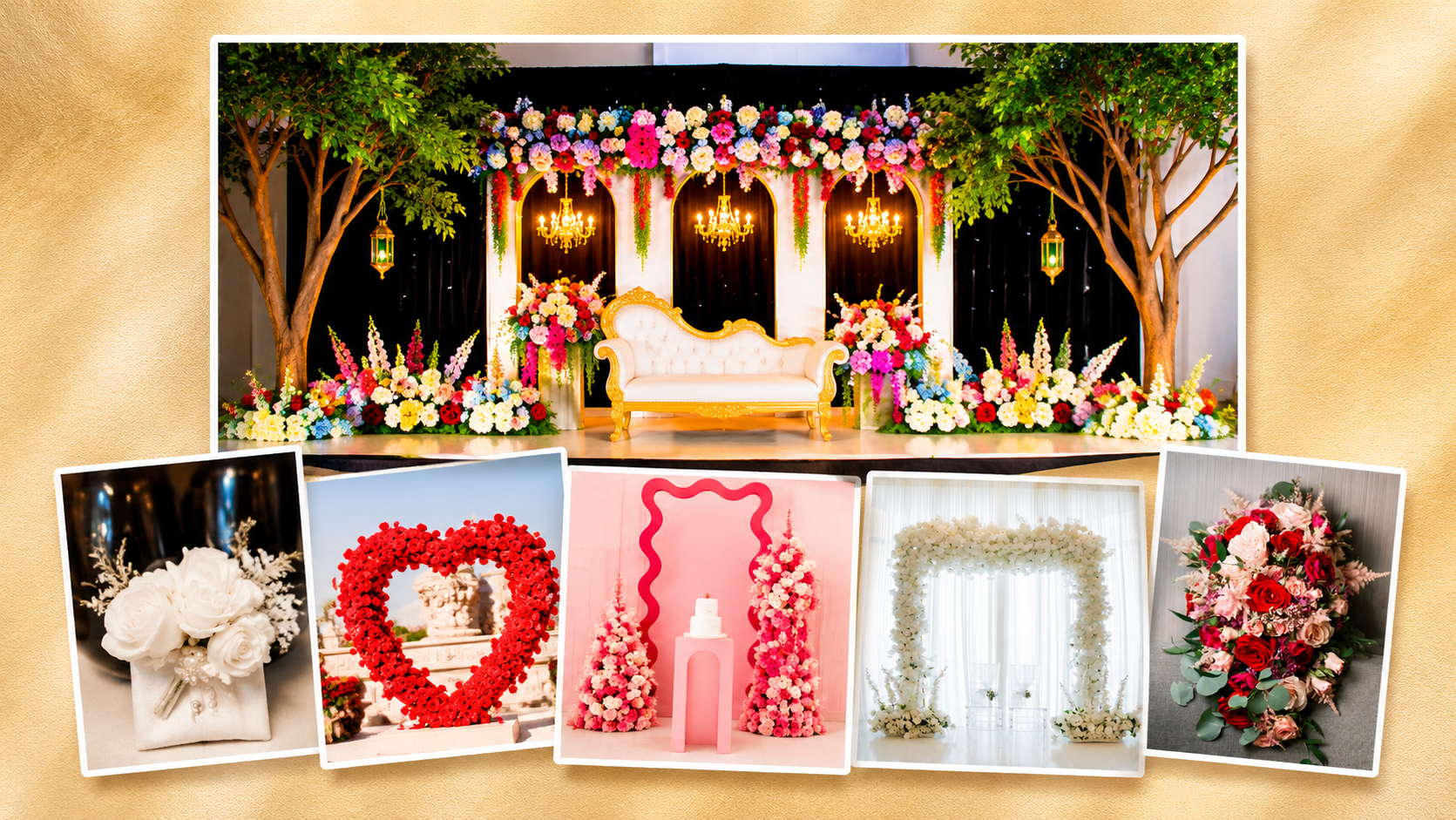
A floral installation above the reception stage, a flower-covered entrance, or an arrangement that frames the mandap can create a strong visual feature.
Another idea is to use one type of flower in a more noticeable way. For example, an installation built around white hydrangeas or roses can look striking without needing several different flower varieties.
You can also combine flowers of different sizes and textures to give the arrangement more depth.
The important thing is to choose the right placement. A large floral installation above the stage or entrance can make a stronger impression than adding flowers to every available surface.
4. Fresh Flowers or Artificial Flowers: What Should You Choose?

This is a practical question many couples have when planning their wedding decor.
Fresh flowers have a natural appearance and bring different textures and shapes to an arrangement. They're a lovely choice for mandaps, stage decoration, entrances, and table centerpieces.
Artificial flowers, on the other hand, can be useful when you need a particular flower style or color that may be difficult to source for your wedding date. They can also work well in larger installations where consistency across the arrangement is important.
You don't necessarily have to choose just one.
A combination of fresh and artificial flowers can work depending on the design. For example, you could use fresh flowers in the main arrangements and suitable artificial floral elements in selected parts of a larger backdrop.
Your choice will depend on the flower varieties, availability, venue conditions, design, and budget. If you have a particular flower in mind, discuss it early with your decorator so there is enough time to explore suitable options.
5. Warm Lighting and Chandeliers That Change the Feel of the Venue
Have you ever seen a wedding venue that looks completely different once the lights come on?
That's how much difference lighting can make.
For Indian weddings in the USA, especially those held in hotel ballrooms and banquet halls, lighting can work alongside the decoration to change the overall atmosphere.
Chandeliers are one option for adding a decorative feature above the reception area or dining space. If the venue already has beautiful chandeliers, you can make them part of the overall design rather than adding too many competing elements.
You can also explore:
- Warm lighting around the mandap or reception stage.
- Hanging lights above selected dining areas.
- Fairy lights for entrances and walkways.
- Soft uplighting to highlight walls and architectural details.
- Small table lamps or candle-style lighting for a more intimate reception setting.
For a Sangeet, you may want more expressive lighting around the stage and dance floor. For a reception dinner, softer lighting can create a more relaxed atmosphere.
The best approach is to plan lighting along with the decor, rather than treating it as something to add at the last minute.
6. Richer Colors with Softer, More Refined Combinations
Red and gold will always have a place in Indian weddings. But if you're planning your 2027 wedding, there are plenty of other combinations to consider.
Some of the color directions worth exploring include:
- Merlot and champagne: Deep wine tones with soft metallic details.
- Emerald and gold: A rich combination for mandaps and reception stages.
- Blush and ivory: A softer look for floral arrangements and draping.
- Powder blue and silver: A lighter combination for a contemporary setting.
- Terracotta and cream: Warm, earthy colors that work well with natural materials.
You can also combine a neutral base with one stronger color. For example, ivory drapes with deep red flowers can create a different look from an entirely red-and-gold stage.
Before finalizing your palette, look at the venue's existing interiors. Wall colors, flooring, furniture, and lighting can all affect how your chosen colors appear in the finished setup.
7. Reception Tables with More Interesting Centerpieces
Wedding reception tables deserve more decoration than you think. After all, your guests spend a good part of the celebration around these tables.
Instead of using the same basic centerpiece on every table, you can explore different arrangements that follow one common design theme.
Fresh floral centerpieces are a classic choice. Low arrangements work well when you want guests to talk across the table without flowers blocking their view. Taller arrangements can create a more dramatic look, especially in venues with high ceilings.
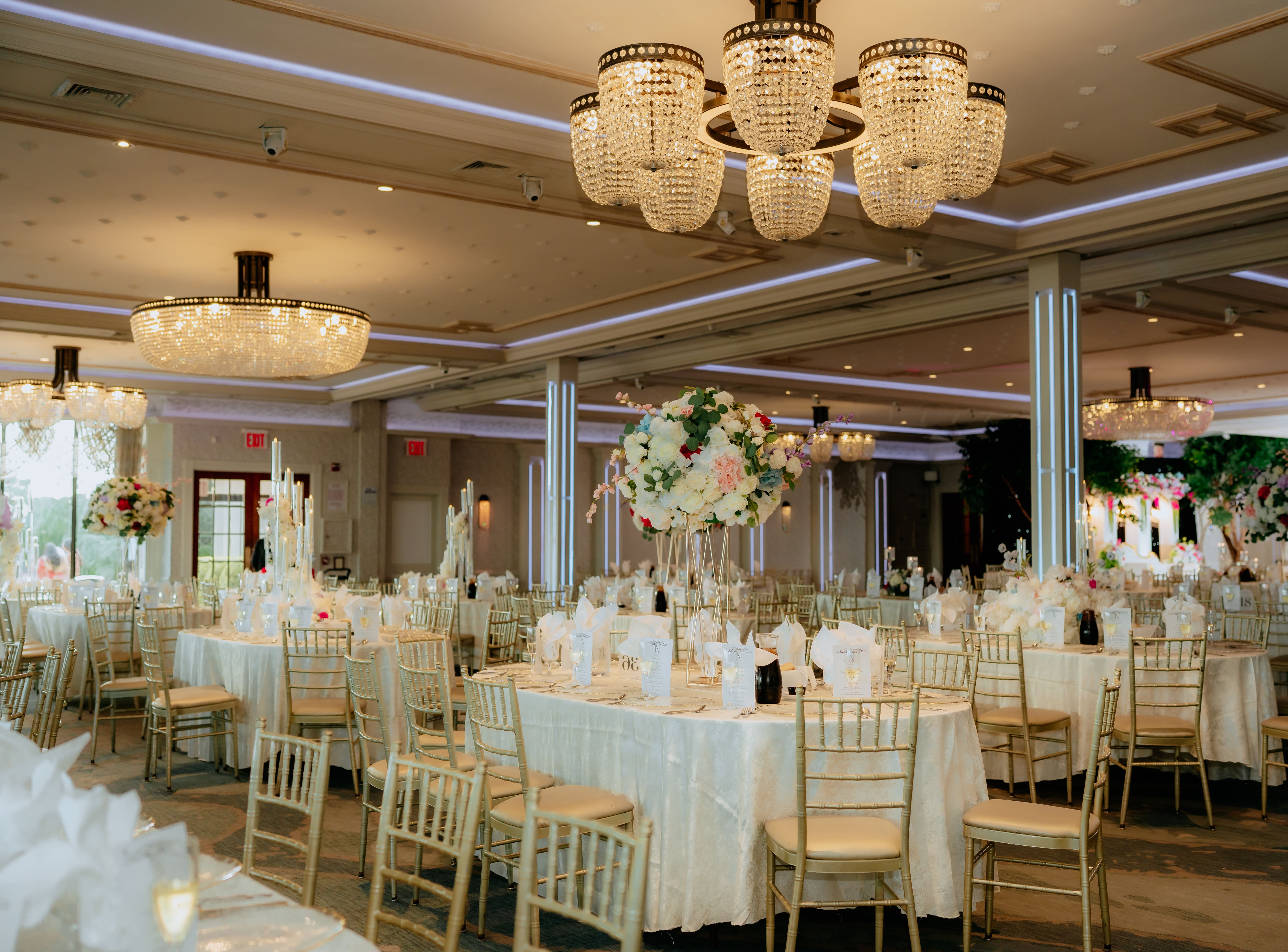
But flowers aren't the only option.
You could also consider:
- Glass vases with carefully arranged flowers.
- Brass or metallic decorative pieces.
- Candle-style arrangements where permitted.
- Small lamps for a warm dining atmosphere.
- Sculptural objects combined with minimal floral details.
For a more coordinated look, match the centerpieces with your table linens, place settings, and overall color palette.
The goal is to make the dining area feel like part of the wedding design, not just a place where tables and chairs have been arranged.
8. Reception Stages with More Than Just a Floral Backdrop
The reception stage is usually one of the most photographed areas of an Indian wedding. So it's worth thinking beyond a simple flower wall.
A stage can have its own character through the backdrop, seating, lighting, and decorative details.
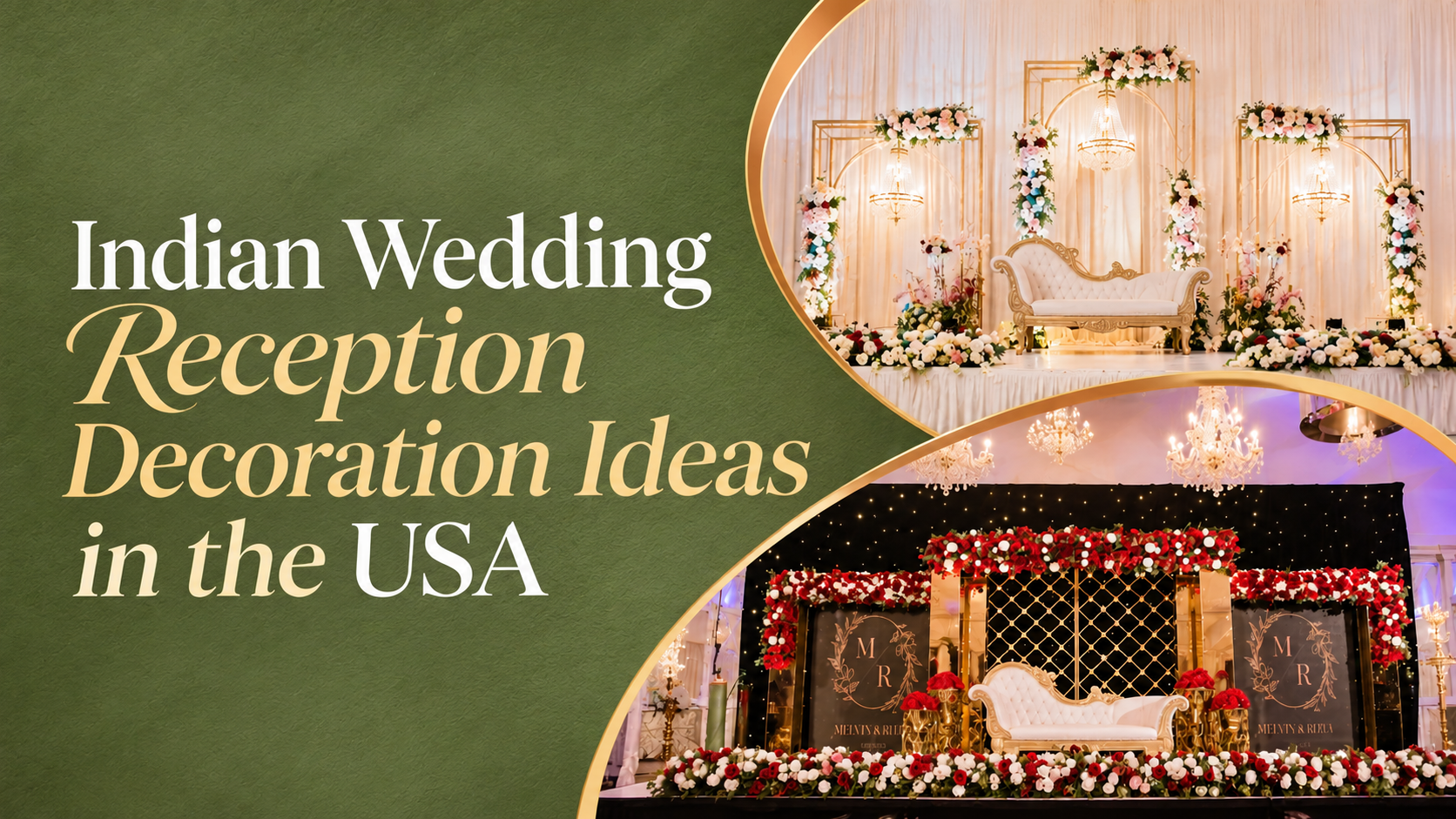
For a traditional look, you could use an ornate arch, detailed panels, and statement seating. If you prefer a modern design, consider curved backdrop structures, soft drapes, and selective floral arrangements.
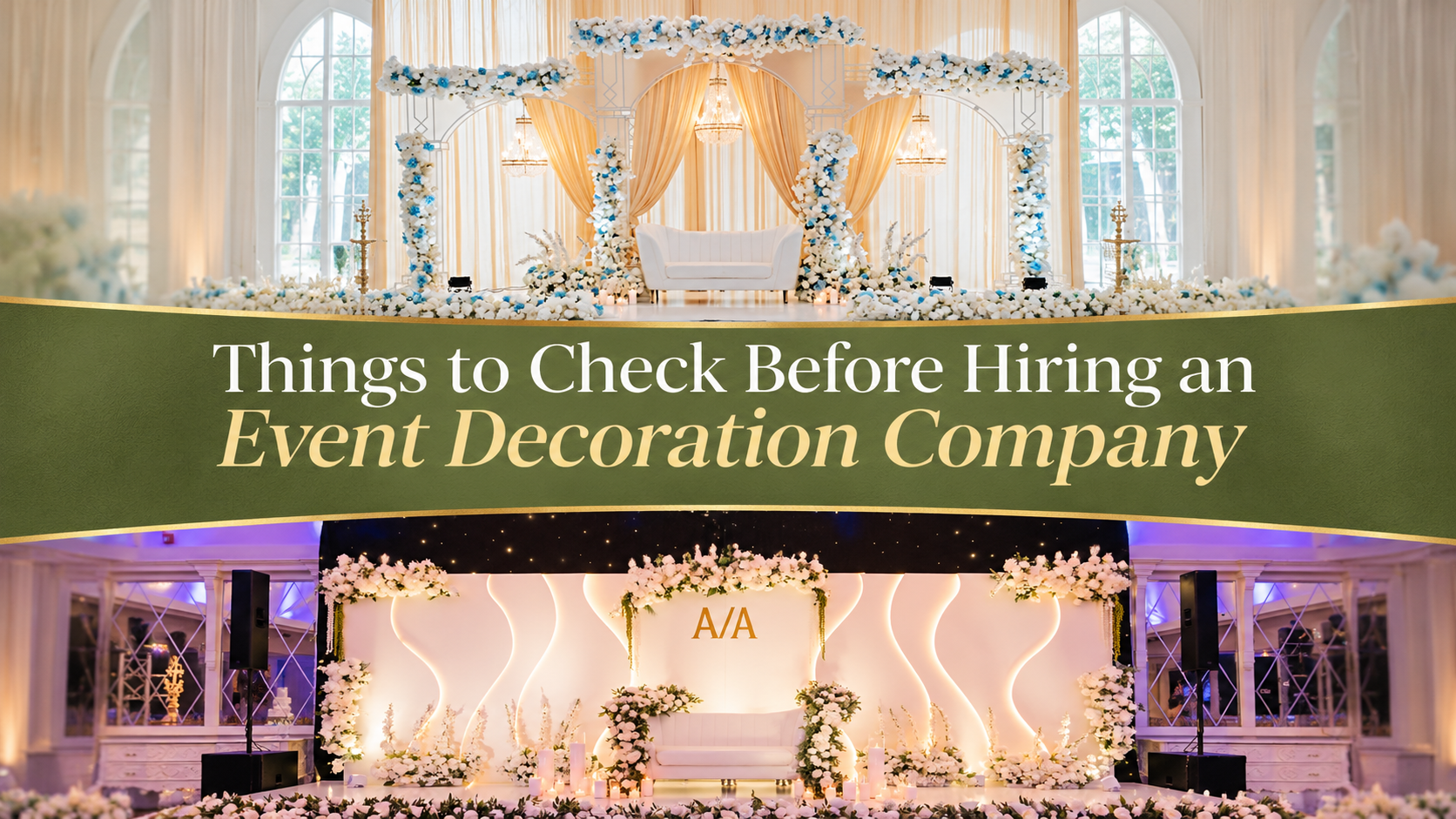
You can also add a few elements that make the stage feel more personal, such as the couple's initials or a monogram worked into the backdrop.
Another approach is to use different textures. For example, fabric draping, floral arrangements, and metallic accents can create depth without making the stage look overcrowded.
Think about how the stage will look from the guest seating area as well as in photographs. Its size, seating arrangement, and lighting should all work with the room.
9. Traditional Indian Details with a Modern American Venue Style
One of the interesting parts of planning an Indian wedding in the USA is bringing your cultural preferences into a venue that may have a very different design style.
You might have booked a modern hotel ballroom but still want a traditional Indian wedding atmosphere.
You could introduce traditional elements through the mandap, brass lamps, floral arrangements, or decorative motifs. Then use cleaner lines, neutral draping, and contemporary furniture to connect everything with the venue.
The same idea works for regional wedding styles.
A couple who wants South Indian influences could explore temple-inspired details and traditional lamps. Someone who loves Rajasthani decor could bring in ornate arches, rich fabrics, and mirror-inspired detailing.
It's about choosing the elements that matter to you and using them in a way that feels right for the venue.
10. Different Decor Styles for Each Wedding Function

Normally, Indian weddings have more than one celebration. A Bridal shower, Haldi, Mehendi, Chandam Charth, Sangeet, wedding ceremony, and reception planned across different days.
Does every event need to look the same? Not at all.
In fact, giving each function its own decoration style can make the celebrations more interesting.
For example, your Haldi could have a bright yellow setup with marigold-inspired details. The Mehendi could use colorful seating and a relaxed floral backdrop. For the Sangeet, you might prefer a more dramatic stage and expressive lighting.
Then, for the wedding ceremony, you can choose a mandap that reflects your traditions. The reception could have a completely different look, with elegant stage styling, coordinated centerpieces, and warm lighting.
You can give each event its own identity while carrying a few details, such as a shared color or floral style, across the celebrations.
This is especially useful when you're hosting your wedding at the same venue over multiple days. The decoration can change with each function without making the celebrations feel unrelated.
Explore Different Pre wedding Celebrations –
Planning Your Indian Wedding Decor in the USA?
With so many styles to explore, choosing your wedding decor can feel like a big decision. But you don't have to settle on every detail right away.
Start with the kind of celebration you want. Think about your venue, the traditions you'd like to include, the flowers and colors you prefer, and how you want each function to look.
You can also save a few inspiration pictures and share them with your decorator. They can help you understand which ideas will work in your venue and how to adapt them to your requirements.
We provide wedding decoration services across multiple locations in the USA. Whether you're planning a traditional Indian ceremony, a modern reception, or a series of wedding celebrations, we can discuss decoration ideas that suit your preferences and venue.
Take a look at our Indian wedding decoration portfolio and explore our wedding decoration services in the USA.
Have a few ideas in mind? Share them with us. We'd love to hear what you're planning and help you create a wedding setting that feels right for your celebration.